FAQ: What’s up with the bell in front of the Museum?
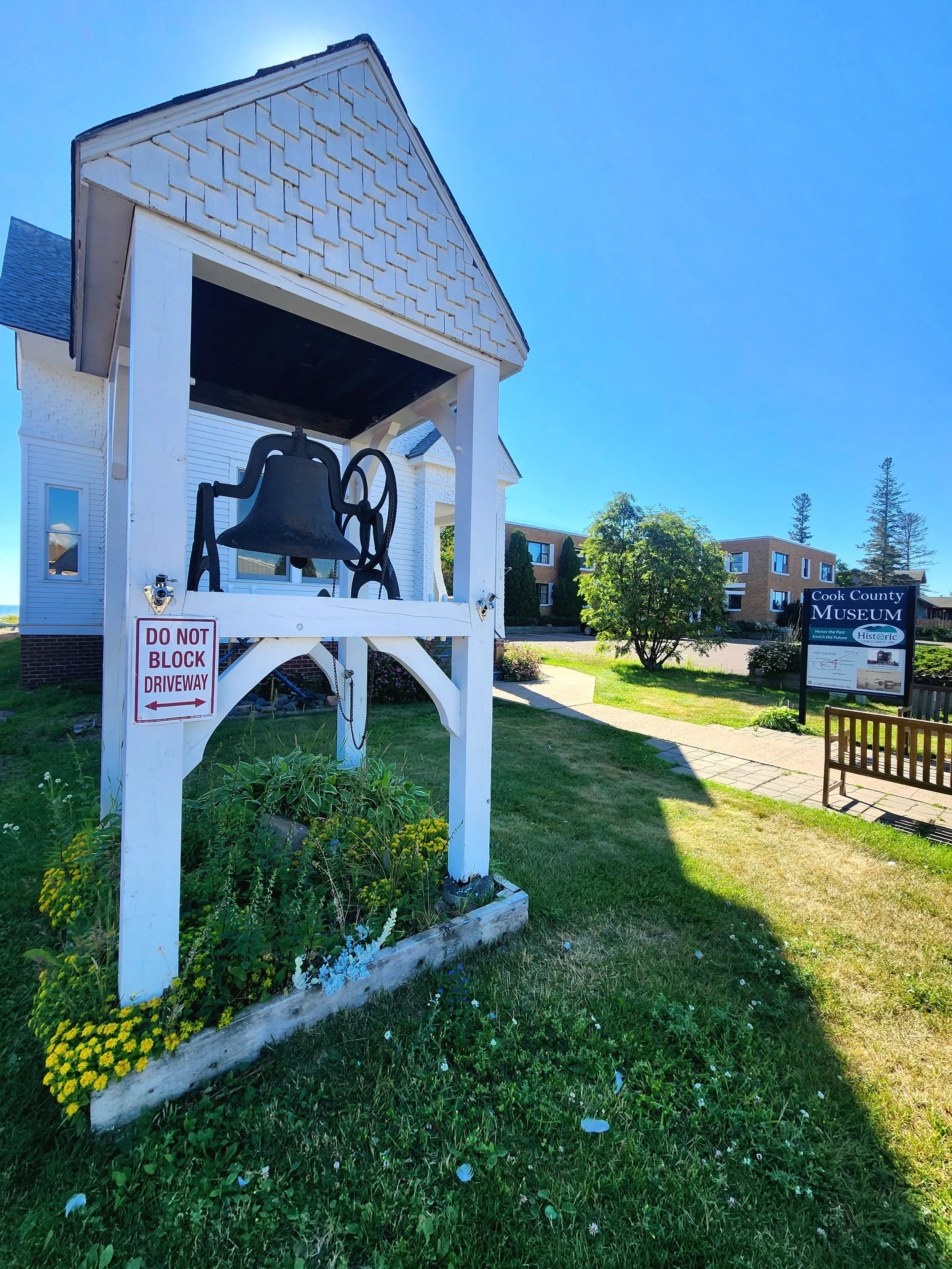
CCC Camp Gunflint F-5, company #712 bell hangs in a bell tower in front of the Cook County History Museum.
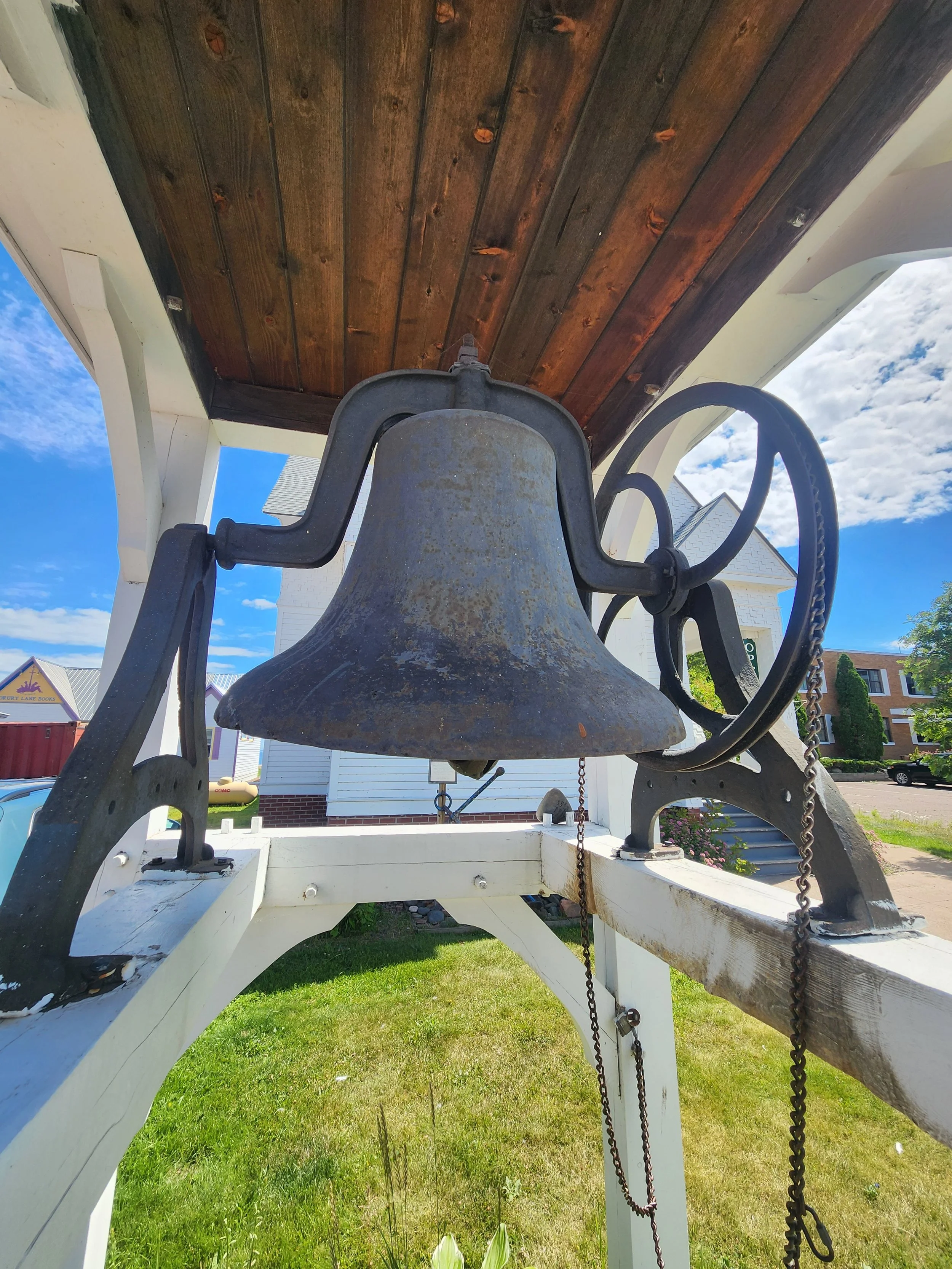
One of the more frequently asked questions our staff and volunteers receive at the History Museum is something along the lines of, "What's up with the big bell in front of the museum?"
The bell initially hung in the Gunflint Civilian Conservation Corp Camp F-5, Company #712, which was located halfway up the Gunflint Trail. Because CCC camps were formatted similar to military barracks, with buildings spread out over large areas, the bell was used to signal the start and end of the day for the over 200 enrollees, notify mealtimes, emergencies, and more.
Gunflint CCC Camp F-5 organized on May 17, 1933, at Fort Snelling in St. Paul, Minnesota, and arrived at North Brule on June 9, 1933, where they lived in tents. The group began work on June 14, where they built a mess hall, washroom, latrine.
Within one year, the crew had accomplished the following:
-Installed over 35 miles of telephone lines
-Made improvements to over 300 acres of timber stands
-Planted over 300 acres of trees
-Removed 345 acres of fire hazards
-Surveyed 34,857 acres of timber
-Spent eight hours suppressing a forest fire
-Constructed one public campground
-Maintained two ranger stations
-Improved and maintained 120 miles of canoe portages
Other specific accomplishments Camp F-5 enrollees completed over the years was building the Lima Mountain fire tower, cabin, and warehouse, and built a white birch foot bridge over the North Brule River.
CCC Camp F-5 operated until June 4, 1942, one of the last camps to be active in Minnesota. By that time, resources were being moved towards WWII and funding for CCC camps was dwindling to nonexistent. The bell hung at the camp from its inception through the closure.
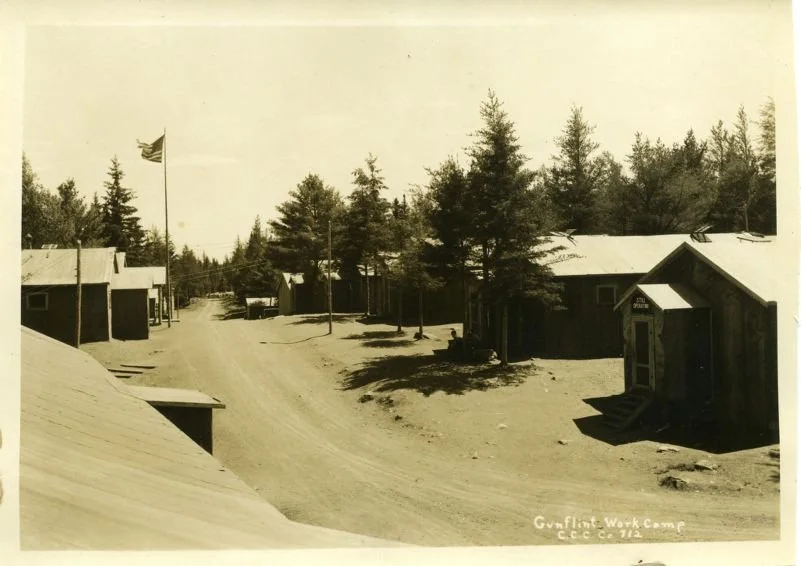
Buildings in the F-5 CCC Camp, Cook County Historical Society
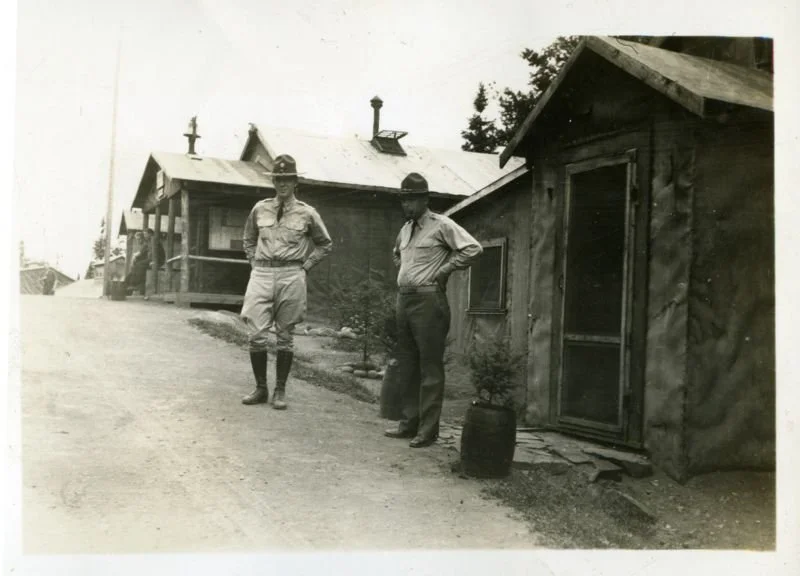
Lieutenant Groves and Capt. E.A. Gall at the Gunflint Civilian Conservation Corps camp, 1936, Cook County Historical Society
The bell was acquired by the Cook County Historical Society and placed in a dedication tower, specifically designed by Russell Zenk, in 1996. A special dedication ceremony was held on August 1 that year. The first ringing was performed by former CCHS president Peggy Heston, and former CCHS presidents Herb Hedstrom and Willis Raff spoke.
The tower and bell is intended to honor the importance of CCC Camps to the history and infrastructure of the area.
Cook County and Grand Portage was home to around 20 different camps. The enrollees in the camps are responsible for many of the infrastructure we see today, including the Cascade River Wayside, components in Judge Magney State Park, Cascade River State Park steps and bridge, the 4-H building (log cabin) at the Cook County Community Center, Trout Lake Road, Kimball Lake Campground, and more. The CC at Grand Portage partnered with the Minnesota Historical Society to search for borders and posts of the original stockade, resulting in the National Monument years later.
To learn more about the CCC Camps in Cook County and Grand Portage, stop by the History Museum to see our CCC exhibit. You can also check out the exhibit virtually by clicking here: https://www.cookcountyhistory.org/virtual-tours
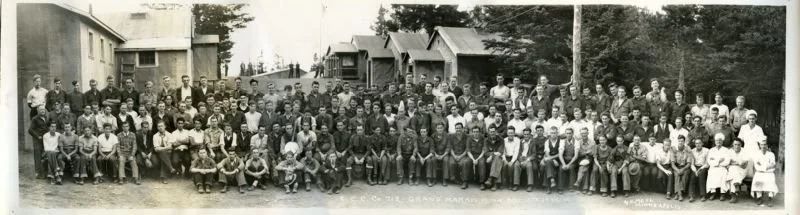
CCC Camp F-5 enrollees in the 1930s, Cook County Historical Society